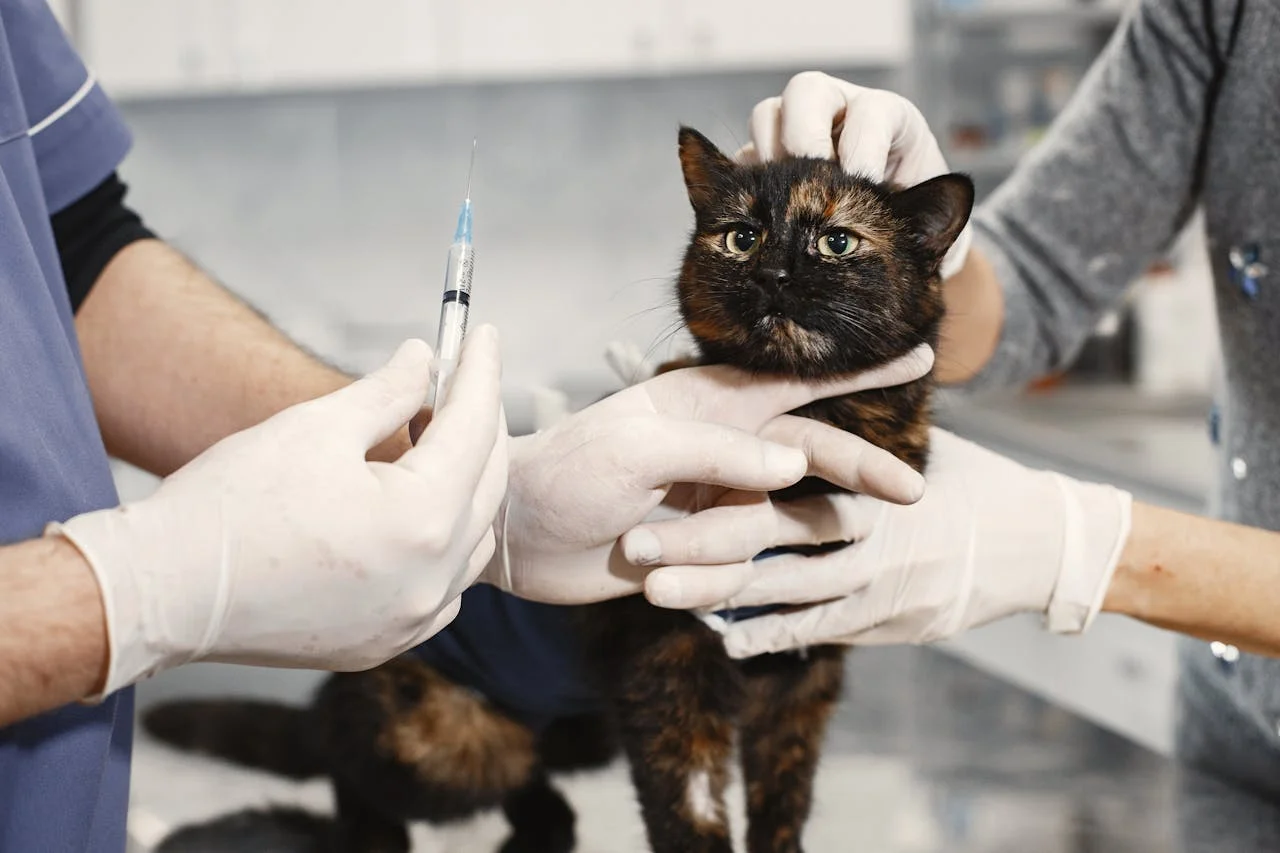
Is your cat protected from the silent killers lurking in your home? The FVRCP cat vaccine is one of the most important shots your cat will ever receive. These viruses can survive on your shoes, clothes, and even float through open windows. We understand you want to keep your furry friend safe from harm. Without this vaccine, your cat could contract diseases with death rates as high as 90%. In this blog, we’re going to break down everything you need to know about feline FVRCP vaccination in simple terms.
The FVRCP vaccine is also called the feline distemper vaccine. But what is FVRCP for cats exactly? The FVRCP meaning and feline FVRCP definition are important to understand. The letters stand for:
Now, you know what is feline FVRCP. This cat combo vaccine protects against three deadly viruses. We call it a 3 in 1 FVRCP shot or feline 3 in 1 vaccine. The feline distemper vaccine FVRCP guards your cat’s health from day one.
The rhinotracheitis calici panleukopenia vaccine is also known as the feline rhinotracheitis calici panleukopenia shot. You might hear names like FVCRP vaccine, FBRCP, FCRVP, or FCRP vaccine, these are misspellings. Certain clinics offer the intranasal FVRCP, which goes in your cat’s nose. Some vaccines include protection against chlamydophila vaccine for cats needs. This addresses feline chlamydia vaccine requirements. Ask your vet if your cat needs this additional coverage.
We recommend the FVRCP kitten vaccine for all cats. But certain symptoms show urgent need:
If you see these FVRCP symptoms or feline FVRCP side effects, contact your vet immediately. The rhinotracheitis calici panleukopenia vaccine prevents these conditions. The rhinotracheitis vaccine component specifically addresses upper respiratory issues. You should never wait for symptoms to appear. Prevention works better than treatment. The FVRCP vaccine for kittens should start early. Even if you plan to keep your cat indoors, they still need protection.
When should you get feline shots FVRCP? Start early with kitten shots FVRCP and here is the full FVRCP vaccination chart:
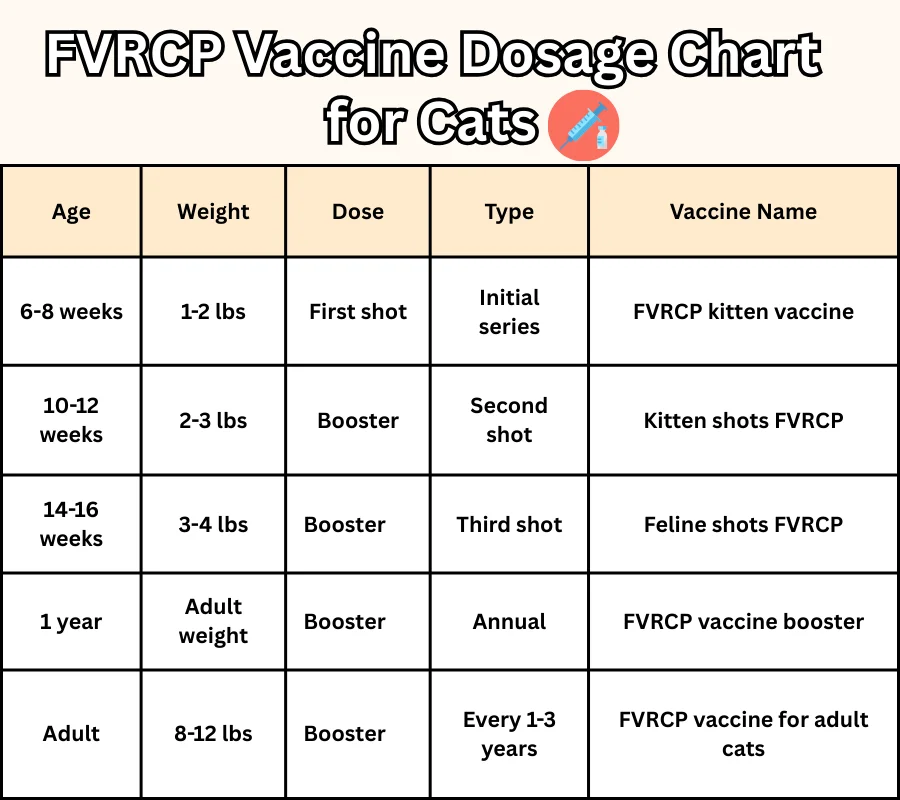
The FVRCP vaccine for kittens requires multiple doses. Your kitten’s immune system needs time to build protection. Adult cats receive FVRCP vaccination less frequently. Some vets offer a FVRCP 3 year vaccine option instead of annual shots. We follow guidelines from veterinary associations. Each cat is unique. Your vet determines the best schedule for your pet. The feline FVRCP vaccine schedule varies by risk factors and lifestyle.
Good nutrition helps your cat handle the FVRCP vaccine cats need. We recommend these foods before and after vaccination:
High-quality protein sources:
Immune-supporting nutrients:
Hydration helpers:
Feed your cat their regular diet before vaccination. Don’t introduce new foods the same day. This helps you spot any vaccine reactions versus food issues. If your your pet’s eyes look red, swollen, or irritated, it can be alarming. But you don’t have to worry as Terramycin for Cats (Oxytetracycline, Polymyxin B) can help treat common eye infections.
Supplements to consider:
You can check out our nutrition guide at Ecopetessentials for more feeding tips. Good food helps minimize feline FVRCP side effects.
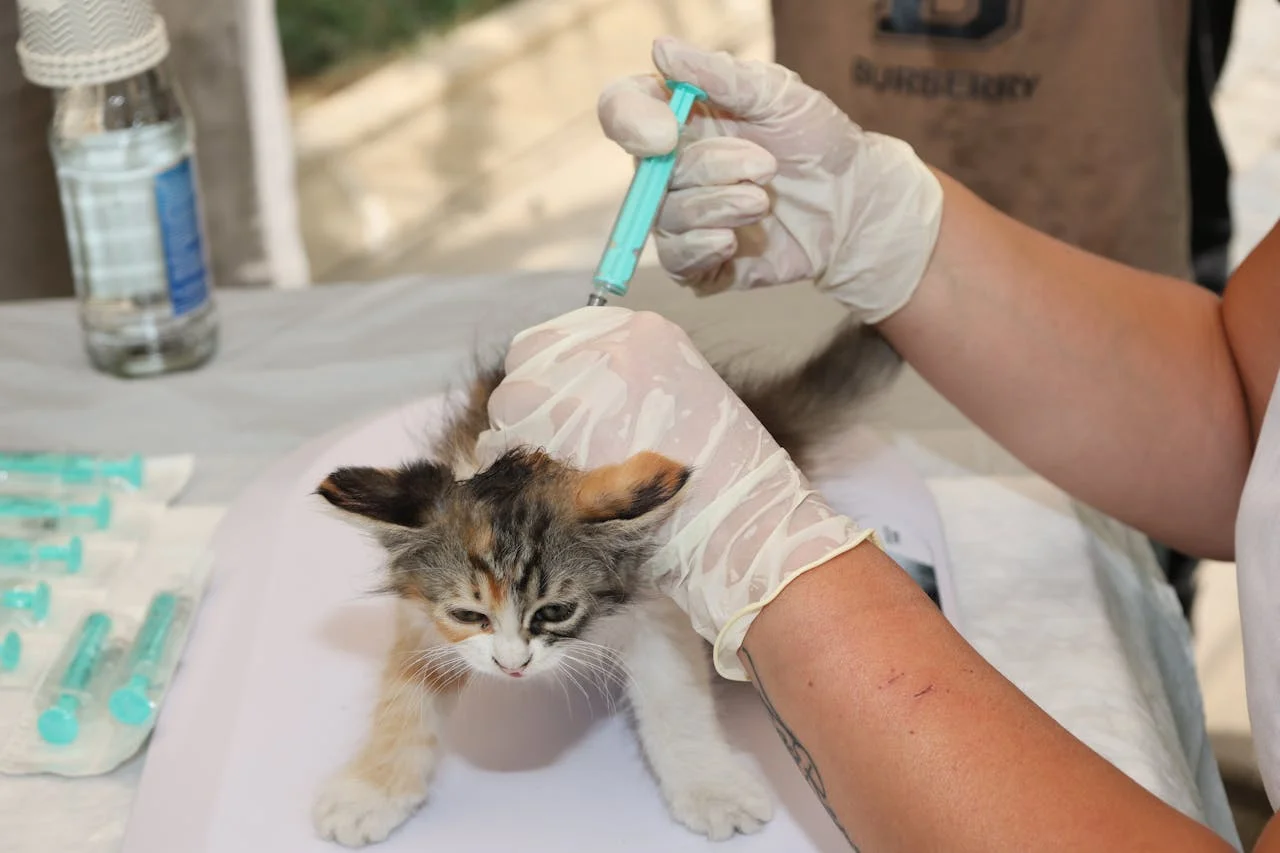
Most cats handle the feline FVRCP vaccine well. However, FVRCP vaccine side effects cats can occur. Therefore, understanding FVRCP side effects helps you prepare.
Common reactions:
You have to keep your cat indoors for 24 hours and provide a quiet resting area. It is good to give them their favorite foods and keep an eye on them.
The FVRCP vaccine serious reactions are quite rare. Call your vet if you notice:
Your cat needs gentle care after their feline combo vaccine. We tell you what to skip:
Don’t do these:
Skip boarding or grooming for a few days. You have to let your cat’s immune system focus on building protection. The feline combination vaccine works best when stress is minimal. By day three of inoculation, your cat should act normal. If not, contact your veterinarian. The FVRCP vaccine cats receive is very safe overall.
Different manufacturers produce the FVRCP vaccine:
These vaccines all protect against the same diseases. The FVRCP vaccine cats get depends on what your vet stocks. All are effective when given properly.
The FVR vaccine is affordable healthcare. Prices range from $15 to $45 per shot. Some places offer the FVRCP vaccine Tractor Supply style – retail locations with vet services. These can be convenient options. Just make sure that licensed professionals give the shots.
➺ Places to Get fvcrp vaccine:
You shouldn’t let the cost of vaccination discourage you. Many communities offer free or reduced-price services.
You have to keep track of your cat’s vaccinations. You’ll need records for:
Most vets provide vaccination certificates. You have to keep these safe in forms of photos for digital backup. It is good practice to update records after each booster. The FVRCP vaccination history helps vets plan future care. It shows when boosters are due and also proves your cat is protected.
❌ Myth: Indoor cats don’t need vaccines.
✅ Truth: The FVRCP vaccine cats receive protects against viruses that enter homes easily.
❌ Myth: One shot provides lifetime immunity.
✅ Truth: Boosters are very important. The FVRCP vaccine booster maintains protection over time.
❌ Myth: The vaccine causes the diseases it prevents.
✅ Truth: Modified live vaccines can’t cause full disease. Minor symptoms differ from actual illness.
❌ Myth: Side effects are dangerous.
✅ Truth: The FVRCP vaccine for cats side effects are usually mild and temporary.
❌ Myth: Adult cats don’t need boosters.
✅ Truth: The FVRCP vaccine for adult cats continues protecting throughout life.
Don’t confuse what is a combo test for cats with the combo vaccine. A combo test checks for diseases like FIV and FeLV. The cat vaccines FVRCP protect against different conditions. Both are important for your cat’s health. The RCP vaccine for cats, PRC vaccine for cats, and RCP feline vaccine all refer to the same protection. The FDRC vaccine is another variation of the name. Whether you call it FVRCP vaccination or RCP shots cats need, it’s the same lifesaving shot.
Protecting your cat with the frccpc cat vaccine is just the beginning of great pet care. At Ecopetessentials, we share practical advice you can trust for every stage of your cat’s life. Whether learning what is FVRCP vaccination or dealing with feline FVRCP side effects, you’ll find clear answers here. You can bookmark our site for daily tips on nutrition, behavior, and wellness that actually work. We’re here to help you give your cat the best life possible with expert guidance you can understand. The FVRCP vaccine cats receive is just one topic we cover in depth. Save Ecopetessentials and visit us often for new articles that make cat care simple and stress-free.
➥ What is a distemper vaccine for cats exactly?
It’s the FVRCP distemper protection. The FVRCP vaccine distemper component prevents panleukopenia. This is what does the distemper shot do for cats – it saves lives
➥ What is the feline viral rhinotracheitis vaccine?
This protects against a herpes virus. It causes sneezing, eye discharge, and breathing problems. The feline rhino component is critical for respiratory health.
➥ What does FVRCP meaning stand for in cat vaccines?
FVRCP stands for Feline Viral Rhinotracheitis, Calicivirus, and Panleukopenia. It protects your cat against three serious viral diseases. This combo shot keeps your feline healthy and safe from common threats.
➥ How often does my cat need FVRCP vaccination?
Kittens need three doses, then a one-year booster. Adult cats get boosters every one to three years based on the FVRCP 3 year or annual protocol. Your vet determines the best schedule for your cat feline rcp.
➥ What are common FVRCP side effects in cats?
You might notice mild fever, tiredness, or soreness where the shot was given. Reduced appetite for a day is normal. These feline FVRCP side effects typically disappear within 24 to 48 hours after vaccination.
➥ Can indoor cats skip the feline fcv vaccine?
No, indoor cats still need FVRCP protection. Viruses can enter your home on clothing, shoes, or through open windows. Indoor cats might follow the FVRCP 3 year schedule after initial series. We recommend the FVRCP vaccine cats receive regardless of whether they go outside or not.

Castiel Smith cares deeply about animals and the planet. He loves sharing tips that help people take better care of their pets while being kind to nature. Whether it’s about eco-friendly pet products or simple ways to take care of your fur babies, Cas loves sharing Behavior & Training Tips.