
Your Labrador Retriever bounces into your life with endless energy and unconditional love. But one question keeps every Lab parent awake at night: how long do labs live? We understand that worry. Your furry friend is family, and you want every precious moment together to count. The average life expectancy of Labrador Retrievers ranges from 10 to 14 years, with most living around 12 years. However, this number isn’t set in stone. With proper care, nutrition, and preventive health measures, you can help your Lab live a longer, healthier life. Whether you have a black lab, yellow lab, chocolate lab, or even a muscular Labrador or red lab dog, we’re here to share practical tips that make a real difference. Your commitment to understanding your Lab’s needs today can add quality years to their life tomorrow.
The lab life expectancy varies slightly by color and genetics. Research shows that chocolate Labs tend to have a shorter lifespan, averaging 10.7 years, while yellow and black Labs typically live 12 to 12.5 years. The life expectancy of black lab dogs and the life expectancy for a yellow lab are quite similar, both hovering around 12 years. Several factors influence how long Labradors live. Genetics play a crucial role, but your daily care choices matter even more. Labs from reputable breeders who test for genetic conditions often enjoy longer lives. The lifespan of black Labradors and yellow lab life span can extend beyond 14 years with excellent care.
According to PetMD, responsible breeding and health screening significantly impact longevity. We always recommend choosing breeders who perform health clearances for hip dysplasia, elbow dysplasia, and eye conditions.
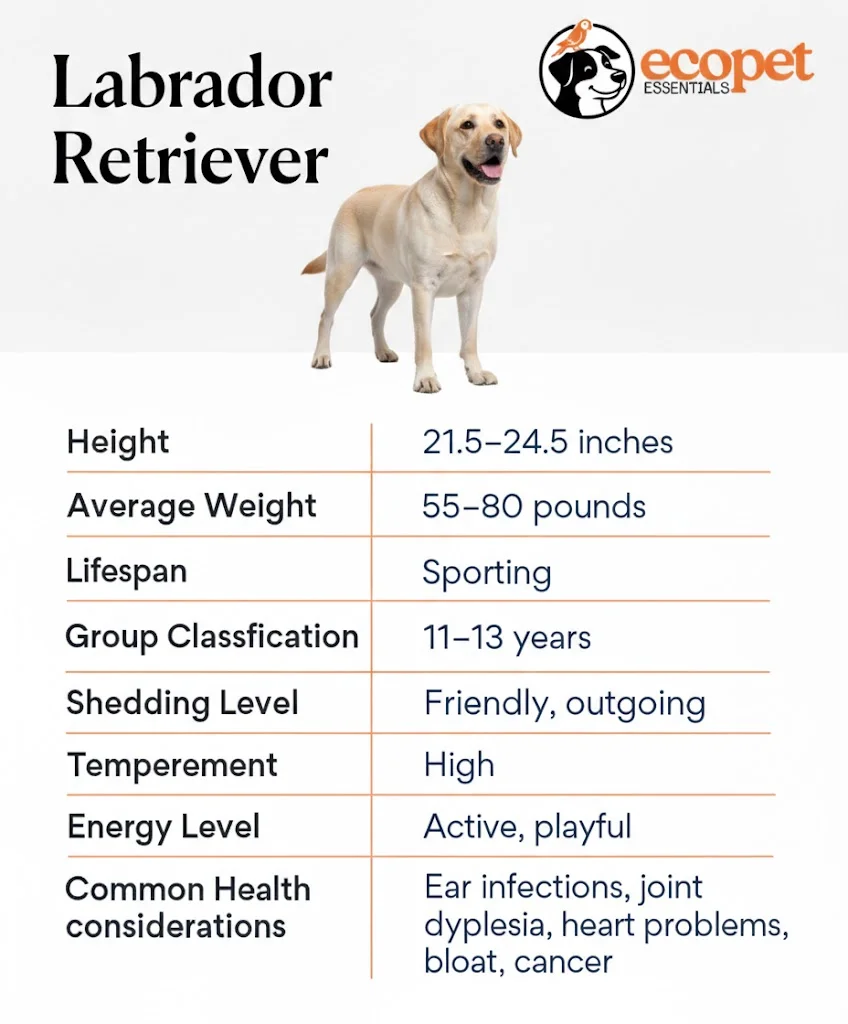
Understanding what threatens your Lab’s health helps you take preventive action. Here are the 10 problems of Labrador health we see most often:
Vetericyn notes that many of these conditions are preventable or manageable with early detection and proper care. If you have a Golden Retriever, and wonder how long do they live, then we have the blog for you!
We’ve compiled proven strategies that can add healthy years to your Lab’s life:

Nutrition directly impacts how long will a black lab live or any Lab color. We recommend these excellent options:
Look for foods with real meat as the first ingredient, balanced omega fatty acids, and joint-supporting ingredients like glucosamine. Avoid fillers, artificial colors, and excessive grains.
Labs are notorious food lovers, making portion control crucial. Here’s our feeding guide:
Always measure food with a proper cup. Labs will eat until they burst, so don’t free-feed. Ecopetessentials’ nutrition guides offer detailed feeding charts for every life stage. You have to use slow-feeder bowls to prevent bloat, a serious condition that can be fatal. Never exercise your Lab right before or after meals.
Yes and no. Labs aren’t demanding in grooming or space requirements, but they need significant time investment. They require daily exercise, mental stimulation, and companionship. Their friendly, energetic nature means they thrive on interaction. Do Labradors get separation anxiety? Absolutely. Labs bond deeply with their families and struggle when left alone for long periods. They’re often called “Velcro dogs” because they follow you everywhere. Crate training, gradual alone-time building, and interactive toys help manage this issue.
While many breeds compete for this title, Labradors consistently rank at the top. Their gentle temperament, patience with children, and eagerness to please make them ideal family dogs. They’re equally happy as service dogs, therapy dogs, or your best friend on the couch
Adult Labs sleep 12-14 hours daily. Puppies need 18-20 hours. Senior Labs may sleep 14-16 hours. This is completely normal and necessary for their health and energy restoration. Quality sleep matters. You have to provide a comfortable bed in a quiet area. Many Labs sleep better in crates, which become their safe den.

Recent studies from PetReleaf show promising developments in managing Lab health issues. CBD supplements are showing potential for arthritis management in aging Labs. Genetic testing has advanced, allowing breeders to screen for more conditions than ever before. New research indicates that maintaining lean body condition can extend lab life expectancy by 2 years or more. This simple change has a massive impact on the life expectancy of Labrador Retriever dogs across all colors.
Your Lab gives you unconditional love every single day. They deserve the same commitment in return. By implementing these nutrition, exercise, and healthcare strategies, you’re actively working to maximize those precious years together. Understanding how long Labradors live empowers you to make informed decisions about their care. We’re here for every step of your Lab’s journey, from energetic puppy years to dignified senior days. You can bookmark Ecopetessentials for more expert advice on pet nutrition, behavior training, and product reviews. Our community of pet lovers shares your dedication to giving Labs their best life. Keep reading our articles to stay updated on the latest pet care research and tips. Your lab’s health is our passion, and together, we can help them live their longest, happiest life possible.
➥ What is the average life expectancy of Labrador Retrievers?
Labs typically live 10-14 years, with an average of 12 years. Yellow and black Labs often live longer than chocolate Labs. Proper care significantly influences their lifespan.
➥ How can I tell if my Lab is overweight?
You should easily feel your Lab’s ribs without pressing hard. They should have a visible waist when viewed from above. Consult your vet for body condition scoring.
➥ When should I switch my Lab to senior food?
Most Labs benefit from senior food around age 7. However, very active Labs might wait until 8-9 years. Look for formulas with joint support and adjusted calories.
➥ Do black labs live longer than yellow labs?
The life expectancy of black labs and yellow labs is nearly identical, both averaging around 12 years. Chocolate Labs tend to have slightly shorter lifespans at 10.7 years.
➥ What exercises are safe for Lab puppies?
Follow the 5-minute rule: 5 minutes of exercise per month of age, twice daily. Swimming is excellent low-impact exercise. Avoid jumping and excessive stair climbing until fully grown.

Castiel Smith cares deeply about animals and the planet. He loves sharing tips that help people take better care of their pets while being kind to nature. Whether it’s about eco-friendly pet products or simple ways to take care of your fur babies, Cas loves sharing Behavior & Training Tips.