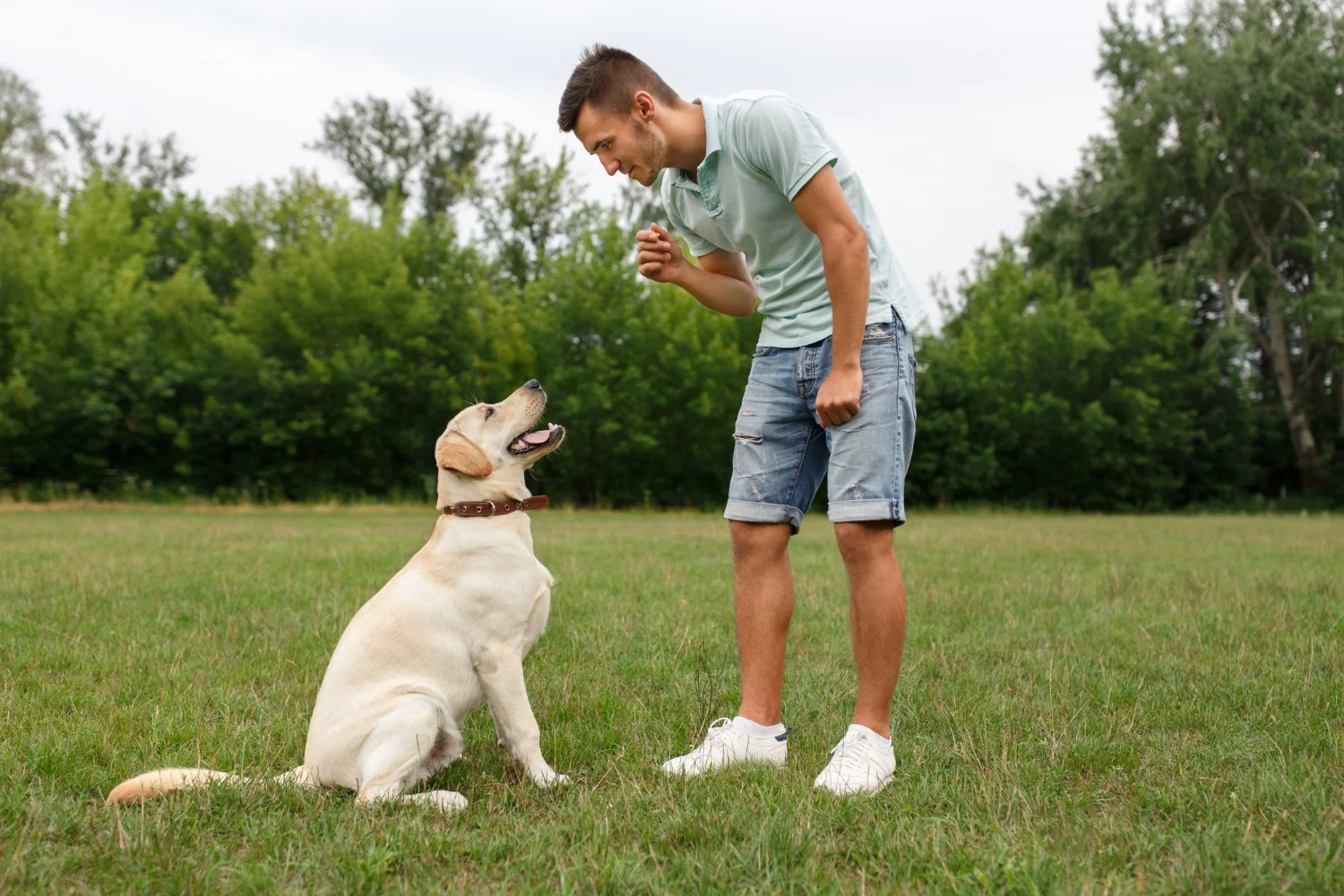
Teaching your dog to sit is the first big win in training. It is simple, fast, and so rewarding. Once your dog learns it, life gets easier for both of you. This one command can stop jumping, calm your dog down, and open the door to advanced tricks. We are going to walk you through exactly how to teach a dog to sit.
“Sit” is the foundation of all dog training. It is simple for your dog to learn. It teaches your dog to focus on you. And it helps your dog stay calm in busy or stressful moments. According to the American Kennel Club, a dog that sits is a dog that is not jumping on people or running wild around the house. That alone makes it worth the effort! We also love this command because it works as your dog’s way of saying “please.” When your dog sits before meals, walks, or playtime, it shows real self-control.
You can start teaching a puppy to sit as early as 8 weeks old. Young puppies have short attention spans, but they are fast learners. The sessions have to be short just 2 to 5 minutes each. Adult dogs can also learn this command at any age. Do not worry if your dog is older. It is never too late to start. You can also check our guide on dog behavior and training tips for more ways to build on this command.
Before your first training session, get these ready:
That is it. You do not need any fancy tools. Just your time, treats, and patience.
These steps are simple. They work for all dogs and for all ages. Follow them in order and you will see results fast.
Hold a treat close to your dog’s nose. Let them sniff it. This gets their full attention on you. Remove all distractions from the room first. A distracted dog is a slow learner.
Slowly move the treat up and over your dog’s head. Guide it back toward their tail. As your dog lifts their head to follow the treat, their back end will naturally drop to the floor. Do not push their rear down. That can scare them or cause confusion.
Say “sit” calmly and clearly, just as your dog’s bottom touches the floor. Say it only once. Repeating it over and over makes the word lose its meaning to your dog.
The moment your dog sits, click your clicker or say “Yes!” or “Good job!” This tells your dog that what they just did was exactly right. Timing here is very important. The click or praise must happen while they are sitting, not after they stand up.
Hand over the treat immediately while your dog is still sitting. Do not wait. If you wait too long, your dog may stand up. And then they think the treat is for standing. Give the treat while the bottom is on the ground.
To get your dog standing again, walk a few steps away or toss a treat in the other direction. Then repeat the whole process. Practice 5 to 10 repetitions per session. Short, fun sessions work better than long, boring ones.
Puppies are eager but easily distracted. Here is what works best for them:
If your puppy loses interest, stop and try again later. Never force a puppy to sit. Learning should feel like a game. You can also check out our post on how to stop a dog from peeing in the house, another big win for new puppy owners!
Here is a cool goal to work toward. You want your dog to sit on their own, without being asked. This is called a default behavior. How do you get there? Reward your dog every time they choose to sit on their own. When your dog walks up to you and sits, give them a treat. When your dog sits while you fill their food bowl, reward that too. Over time, your dog figures out that sitting gets them good things. It becomes their go-to move. Their way of saying “please!” This tip comes from both Purina’s training experts and the AKC. It really works.
Now you know exactly how to teach a dog to sit! This one command is going to change how you and your dog communicate every single day. It builds trust, improves behavior, and makes training so much more fun. We at Ecopetessentials are here for every step of your pet’s journey. Whether you need breed guides, product reviews, or more behavior training tips, we have got you covered. You can bookmark this page, save it to your favorites, and keep coming back to Ecopetessentials for trusted, easy pet care tips that actually work. Your dog is lucky to have you, and we are here to help you be the best pet parent possible. 🐾
Also Read: Why Your Dog Acts Out & How to Fix It
➥ How long does it take to teach a dog to sit?
Most dogs learn the “sit” command in just a few short sessions. With daily practice, your dog can get it in 3 to 7 days.
➥ How do I teach a puppy to sit without treats?
You can use praise, play, or a toy instead. But treats work fastest. Most puppies respond very well to small, tasty food rewards during training.
➥ My dog knows “sit” inside but not outside. Why?
Dogs do not generalize well. You need to practice the command in many places so your dog learns it works everywhere, not just at home.
➥ What if my dog refuses to sit at all?
Try luring from a down position instead. Start with your dog lying down, then slowly raise the treat until they sit up. Reward each small step.
➥ Should I use a clicker to teach my dog to sit?
A clicker can help you mark the exact moment your dog sits. But it is not required. You can use your voice—say “yes!” or “good!”—instead.

Castiel Smith cares deeply about animals and the planet. He loves sharing tips that help people take better care of their pets while being kind to nature. Whether it’s about eco-friendly pet products or simple ways to take care of your fur babies, Cas loves sharing Behavior & Training Tips.