
Cats can get pregnant as early as four months old. This surprises many pet owners. Whether you planned for kittens or not, knowing the signs matters. We’re here to help you understand cat pregnancy from start to finish. Our blog covers everything you need to know about caring for your expecting cat and get you real answers for your “how to tell if a cat is pregnant?” searches. You’ll learn what to watch for and how to prepare. Let’s help you and your cat through this special time together.
How long are cats pregnant? The cat gestation period lasts about 63 to 65 days. That’s roughly nine weeks or two months. The pregnancy cycle of cats can vary slightly. Some deliver a few days early or late, which is completely normal. How long do cats stay pregnant depends on the individual cat and the species. Here are of the most common cat pregnancy gestation time:
Now, you know the answer to “How long is a cats pregnancy exactly?” Cat gestation time matters when planning for the birth. Knowing how long is the gestation for cats helps you prepare. You can set up a safe space and gather supplies in time. Understanding how long is gestation for cats lets you schedule vet visits properly.
The stages of pregnancy in a cat are divided into three phases. These cat pregnancy stages progress quickly.
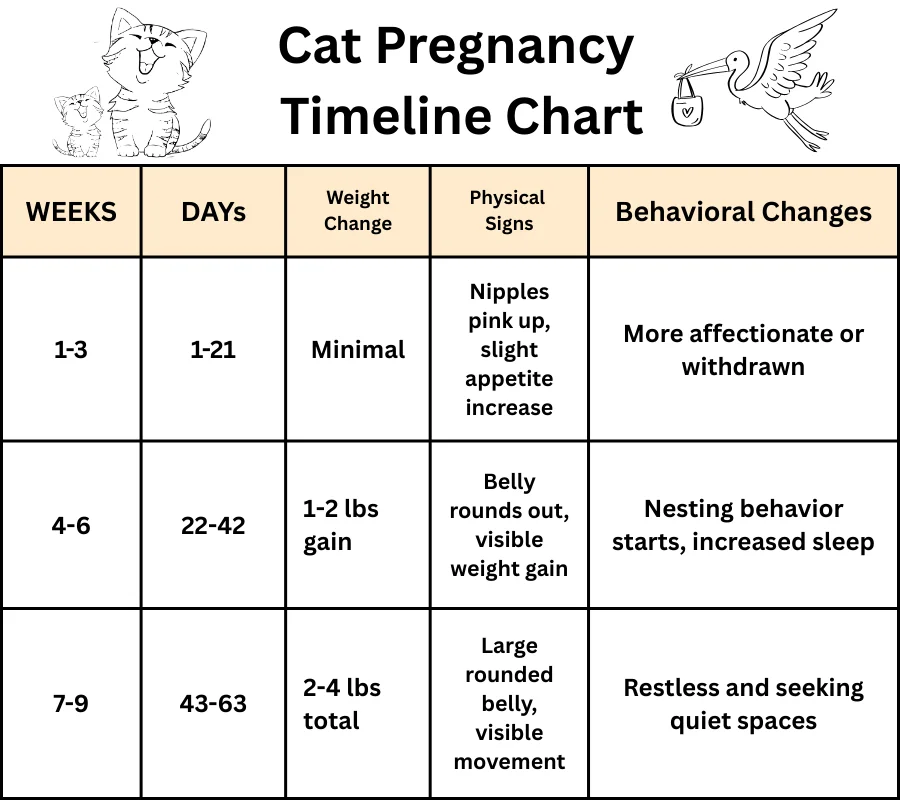
➺ Early Stage (Weeks 1-3): Minimal visible changes happen in early signs a cat is pregnant. Your cat might seem slightly tired or more affectionate. How to know if my cat is pregnant at this stage requires close observation. This is the beginning of stages of pregnancy cats go through.
➺ Middle Stage (Weeks 4-6): This is when pregnancy becomes obvious. Her belly grows rapidly. Cat how long pregnant at this stage is about halfway through. Appetite increases significantly. She might become less active and sleep more. The pregnant cat belly stages become noticeable now.
➺ Late Stage (Weeks 7-9): The pregnant cat belly stages reach their peak. Her belly is large and round. You can feel kittens moving. She starts preparing her nest. How long is a cat pregnant for total? By now, you’re nearing the 63-65 day mark.
What does a pregnant cat look like in late pregnancy? Her belly hangs low and sways when she walks. From above, she appears pear-shaped. The pregnant cat belly is very noticeable. Her mammary glands are swollen and prominent. These are clear cat pregnancy signs you can observe.
How to see if your cat is pregnant requires a systematic approach. Follow these steps to check for signs of pregnancy of cats. This answers how to know if cat is pregnant definitively.
You can look at her nipple color and size. They should be enlarged and pink or red around week three. This is one of the earliest signs of pregnancy of cats. The nipples become more prominent than usual. This helps with how to know if a cat is pregnant early.
How can you tell if your kitten is pregnant by looking? A pregnant cat’s belly hangs lower and rounds out. The weight distributes differently than regular weight gain. Her spine stays visible while her belly expands. How to tell if cat pregnant involves this visual check. Is my cat pregnant? Body shape changes answer this question.
Weigh your cat weekly if possible. Pregnant cats should gain weight steadily. Signs your cat is pregnant include this gradual weight increase. How do i know if my cat is pregnant? Weight gain is a reliable indicator. This is important for house cat pregnancy monitoring.
How can you tell when your cat is pregnant through food? She’ll eat more as pregnancy progresses. Pregnant cats need more food and might eat up to 50% more than usual. Provide high-quality kitten food for extra nutrition. This helps answer how to know if your cat is pregnant.
Is my cat pregnant? Watch for personality shifts. Some cats become more loving. Others prefer solitude. Cat pregnancy signs include these behavioral changes. Increased sleeping is also common. Signs of cat is pregnant show through behavior too.
Like humans, cats can have morning sickness. Mild vomiting in early pregnancy is normal. How to know if cat is pregnant includes watching for this symptom. It usually passes after a few days. Cat pregnancy early signs often include nausea.
After week six, you might see kittens moving. Never press hard on her belly. How do you tell if a cat is pregnant in late stages? Gentle observation shows movement clearly. This is part of pregnancy for a cat progression.
How do i know if my cat is giving birth soon? A vet provides accurate confirmation. They can determine how many kittens to expect. This is the most reliable cat pregnancy check available. How to tell if your cat is pregnant gets confirmed here professionally.

At what age can a cat get pregnant? Female cats reach sexual maturity very young. When can cats get pregnant typically? As early as four months old during their first heat cycle. How early can cats get pregnant? Some cats mature even earlier at three and a half months. How young can a cat get pregnant safely? Any pregnancy before six months old is risky for the young mother.
House cat pregnancy can happen to indoor cats who escape outside. Male cats can sense a female in heat from far away. Even a few hours outside can result in pregnancy for a cat. Therefore, spaying your cat before her first heat prevents accidental pregnancies and unwanted litters. You can talk to your vet about the right timing for your cat. This prevents both planned and unplanned cat pregnancy situations.
Schedule a vet visit as soon as you suspect pregnancy. How to know if your cat is pregnant for certain? The vet confirms using ultrasound or palpation around day 20. This is the best cat pregnancy check method available.
Your vet will check for:
Never try to feel for kittens yourself. You could hurt them or your cat. Leave examination to the professionals. How can i tell if my cat is pregnant safely? Always use vet confirmation. A second visit should happen two weeks before the due date. How long is gestation for cats until birth? The vet estimates based on examination. They’ll explain signs of labor and when to call for help. How do you know if your cats pregnant cat is ready for birth? Professional guidance helps.
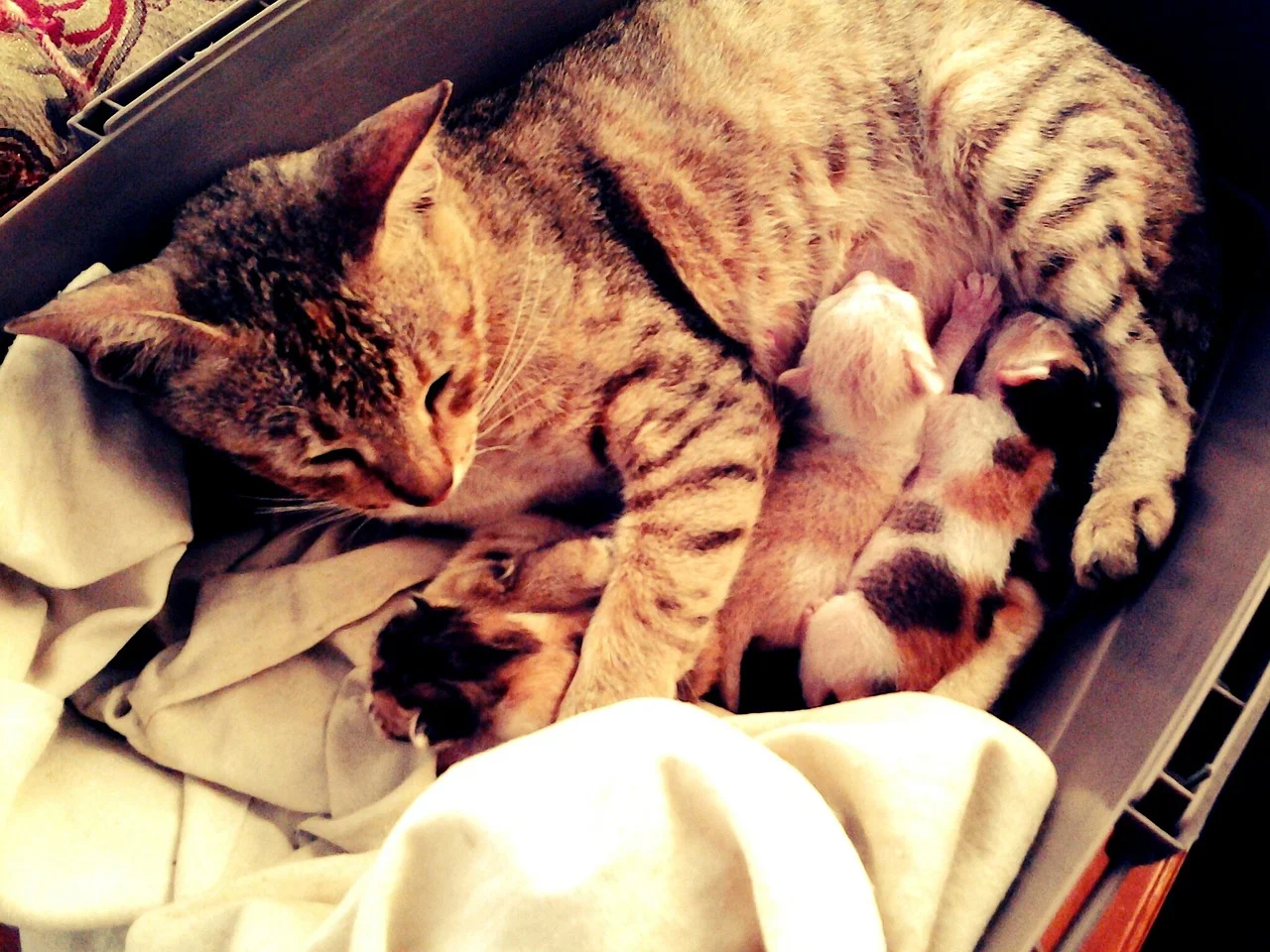
Preparing for pregnant cats requires specific supplies. Having everything ready reduces stress when labor starts. These items support pregnancy for a cat through delivery.
➺ Nesting Box: Get or make a box large enough for your cat to stretch out. It should have low sides so she can enter easily. Place soft blankets or towels inside. This is where cat pregnancy ends with birth. Signs a cats pregnant cat needs this include nesting behavior.
➺ Heating Pad: Newborn kittens can’t regulate body temperature. A low-heat pad under half the box helps. Kittens can move to the cool side if needed. This is essential after how long does it take a cat to have kittens.
➺ Kitten Food: Switch your pregnant cat to kitten food during week four. It has extra calories and nutrients she needs. How long does it take cats to have kittens while eating properly? The same time, but healthier. Continue through the cat gestation time.
➺ Extra Litter Boxes: Pregnant cats use the bathroom more often. Add another litter box in a quiet location. Keep all boxes very clean throughout the cat pregnancy. This helps during the entire cat pregnancy period.
➺ Cleaning Supplies: Have paper towels, mild disinfectant, and clean towels ready. You’ll need these during and after birth. Signs cat is giving birth mean you’ll use these soon. Prepare before signs of labour in a cat appear.
➺ Scale for Kittens: A small kitchen scale works perfectly. Weigh kittens daily to track growth. This helps ensure they’re nursing properly after birth.
How long does it take a cat to have kittens safely? Less time when she feels secure. You can pick a quiet room away from household traffic. Cats prefer dark, warm, and private spaces. This is why they sometimes pick closets or under beds. If you don’t plan properly, they WILL give birth in there! You can start by setting up the nesting box two weeks before the due date. Show your cat where it is. Put her favorite blanket inside. Most cats will use the box you provide if introduced early. This prevents accidental births in unwanted locations.
Keep other pets away from this space. Your cat needs peace and quiet. Stress can delay labor or cause problems. Make sure she has food, water, and a litter box nearby. This supports stages in cat pregnancy through delivery. Check the room temperature. It should stay between 75-80°F for the kittens. Newborns get cold very easily. They can die from hypothermia in the first week. Maintain warmth throughout the cat gestation period end.
Cat labor signs usually start 24 to 48 hours before birth. How long is cat pregnant for before labor? The full 63-65 days typically. Your cat becomes restless and won’t settle. Signs cat labor is approaching become obvious.
Signs of labor for a cat include:
Her body temperature drops to about 100°F from the normal 101-102°F. You have to take her temperature twice daily in the final week as the drop signals labor within 12-24 hours. These are classic signs of labor cat owners watch for. How do you know if your cats pregnant cat is ready? These labor signs tell you. Active labor brings visible contractions. You’ll see her belly muscles tighten and release. If you are wondering, “How long does it take cats to have kittens in total?” Labor lasts four to six hours on average.
Most cats handle birth without help. Your job is to watch quietly from a distance. Don’t interfere unless something goes wrong. Your presence might stress her out during this critical time. Each kitten arrives in a fluid-filled sac. The mother cat breaks this sac and licks the kitten clean. This stimulates breathing. She’ll also bite through the umbilical cord and kittens come every 15 to 60 minutes after the first. This is normal for how long does it take a cat to have kittens sequentially.
How to tell if a cat is pregnat with complications during birth? Watch for warning signs:
Have your vet’s emergency number ready. Don’t wait if something seems wrong. Quick action saves lives during difficult births. Knowing signs of labour in a cat helps you identify problems early.
Understanding what happens after delivery helps you care for new mothers. Some changes are normal, while others need vet attention. This postpartum period follows the complete cat gestation period.
➺ Appetite Increase: Your cat will eat much more while nursing. She needs up to three times her normal food intake. Feed her kitten food throughout nursing. How long are cats pregnant and then nursing? Nursing lasts about eight weeks after the 63-day pregnancy.
➺ Weight Loss: Gradual weight loss after birth is normal. She’ll return to pre-pregnancy weight over several weeks. Sudden dramatic weight loss needs vet attention immediately.
➺ Discharge: Some bloody discharge for a few days after birth is normal. It should decrease daily and not smell foul. Heavy bleeding needs immediate vet care.
➺ Protectiveness: Mother cats become very protective of their kittens. She might hiss at other pets or people. This behavior usually decreases after a few weeks.
➺ Tiredness: Caring for kittens is exhausting. Your cat will sleep when kittens sleep. Make sure she has quiet, undisturbed rest time throughout recovery.
Proper aftercare ensures healthy recovery for everyone. Follow this timeline for best results after how long does it take cats to have kittens completes.
You can check out our cat behavior training tips to prepare for raising kittens properly.
Kittens need their mother for at least eight weeks. They learn crucial social skills during this time. Therefore, separating them too early causes behavioral problems later. This follows the complete pregnancy for a cat cycle.
If you decide to put up the cats up for adoption then, you have to look for good homes and potential adopters. You can also contact local rescue organizations for help. Many help place kittens in loving homes successfully.
We hope this blog helps you support your pregnant cat with confidence. Whether your cat pregnancy was planned or accidental, we’re here to help. You can bookmark our site for more helpful pet care information. Moreover, we share practical advice you can trust. Keep reading our articles to become the best pet parent possible. Your cat and her kittens deserve excellent care, and we provide the knowledge you need. Visit us regularly for updates on cat health, behavior training, and product recommendations that truly work.
➺ How to tell if a cat is pregnant without a vet?
Watch for enlarged pink nipples, rounded belly, weight gain, and increased appetite in your cat. These signs appear around three weeks after mating. A vet visit gives you definite confirmation though.
➺ What are early cat pregnancy symptoms?
Early signs include pink nipples, mild vomiting, increased affection, and slightly bigger appetite for your cat. These show up two to three weeks after conception. Changes in your cat happen gradually at first.
➺ How young can a cat get pregnant?
Cats can get pregnant at just four months old during their first heat cycle. This is very young and risky for your cat. Early spaying prevents this dangerous situation for your kitten completely.
➺ How do I know if my cat is giving birth?
Signs include restlessness, refusing food, temperature drop, rapid breathing, loud vocalization, and strong contractions in your cat. She’ll stay in her nesting box and vocalize more than usual before delivery starts for you.
➺ How long does it take cats to have kittens?
Active labor takes four to six hours on average for your cat. The first kitten arrives within two hours of strong contractions. Additional kittens come every 15 to 60 minutes after that for you.

Castiel Smith cares deeply about animals and the planet. He loves sharing tips that help people take better care of their pets while being kind to nature. Whether it’s about eco-friendly pet products or simple ways to take care of your fur babies, Cas loves sharing Behavior & Training Tips.