When we think about pet care, music might not be the first thing that comes to mind. But the ukulele has a special power over our furry and feathered friends. In this blog, our team at Ecopetessentials is going to share how ukulele history connects with your pet’s wellbeing. Have you noticed your dog settling down when soft music plays? Or your cat purring contentedly during quiet melodies? We have seen countless stories of pets finding comfort in ukulele music. From nervous Chihuahuas nestling under the instrument to cockatiels bobbing along to each strum, the connection between pets and this gentle instrument is remarkable. Understanding ukulele history helps us appreciate why our animals respond so positively to its soothing tones.
The ukulele history begins on a small Portuguese island called Madeira. In 1879, workers sailed from Portugal to Hawaii seeking jobs in the sugarcane fields. These immigrants packed more than just their belongings. They brought small four-stringed instruments called machete de Braga or braguinha. One musician named João Fernandes made quite an entrance. As his ship docked in Hawaii, he jumped onto land and began playing his instrument. His fingers moved across the strings with incredible speed. The Hawaiian people watching had never seen anything like it.
Hawaiian craftsmen adapted these designs and created something new. The instrument got its name from Queen Lili’uokalani, who described it as “the gift that came here,” from the Hawaiian words “uku” (gift) and “lele” (to come). King Kalākaua loved the instrument so much that he helped make it popular across Hawaii. The ukulele became a symbol of Hawaiian culture and music. Its gentle, melodic sound spread worldwide by the early 1900s.
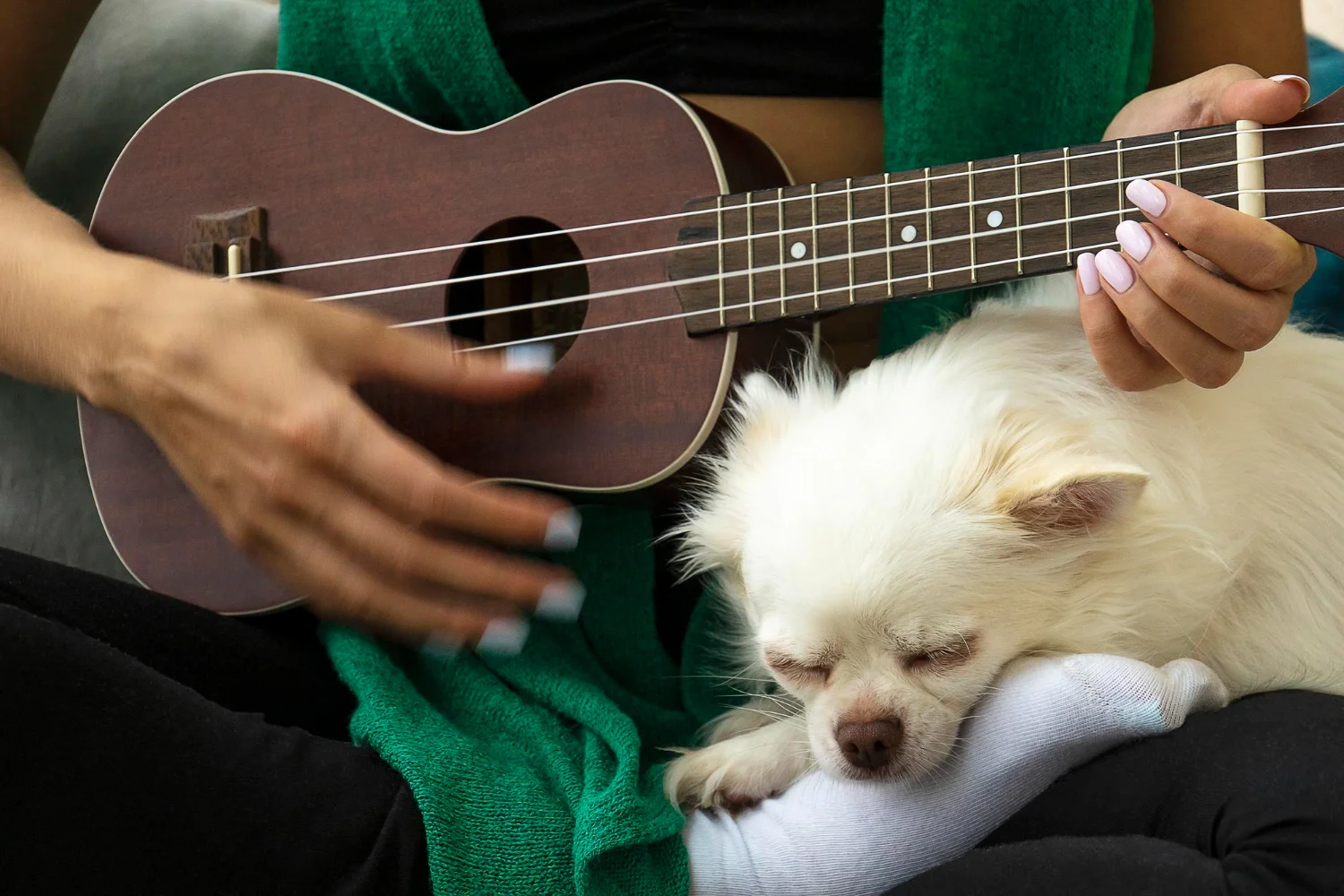
We have discovered something amazing at Ecopetessentials. Pets respond beautifully to ukulele music. The soft nylon strings create frequencies that comfort anxious animals. If you’re looking for a natural way to calm your pet, then ukuleles are a great choice.
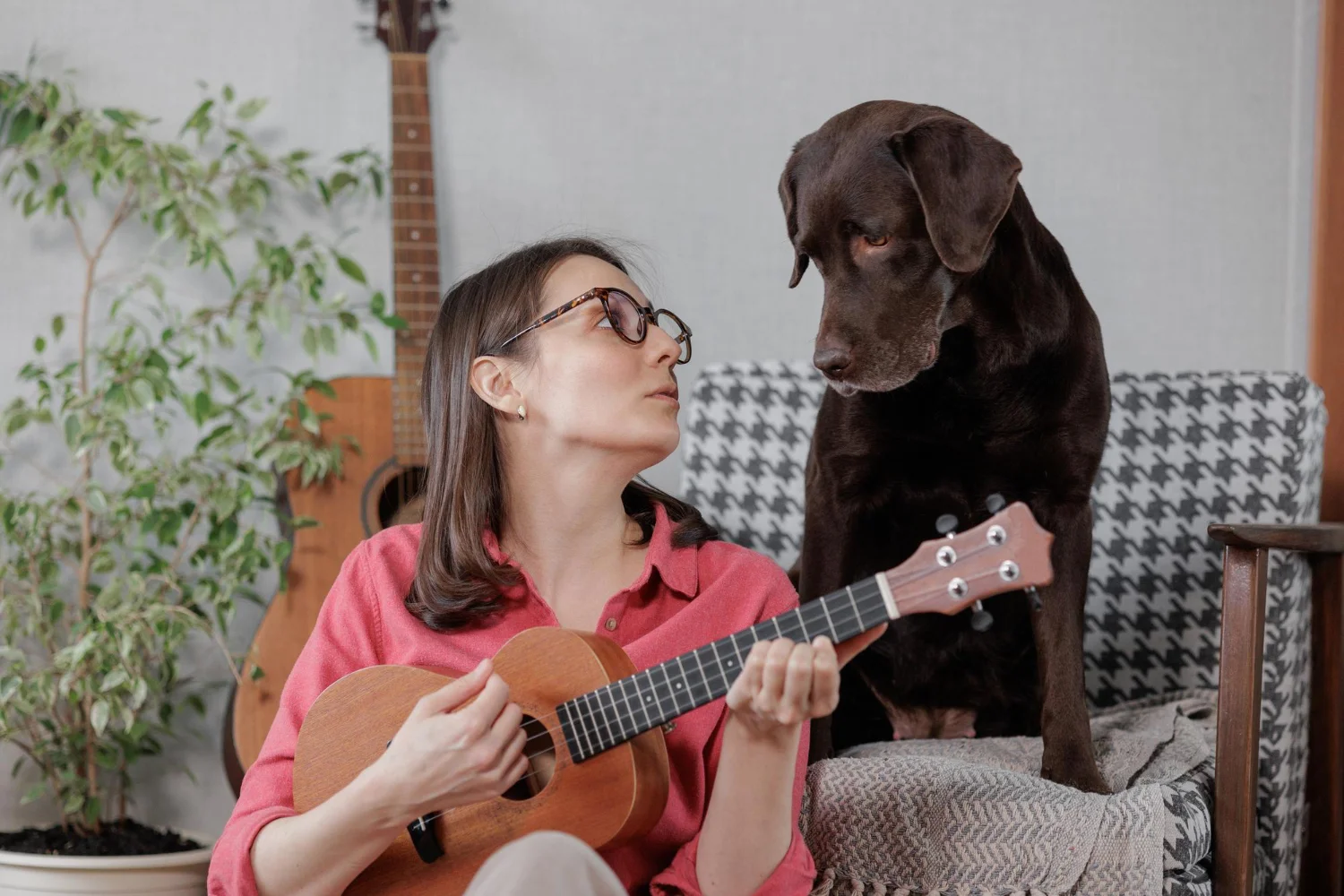
Many dog owners report their pets nestling close during practice sessions. One Chihuahua owner shared how their nervous pup found the perfect spot under the ukulele’s waist. The dog felt safe and calm as the music played above him. Your dog might show similar behavior. Anxious dogs often struggle with household objects and sudden movements. However, the ukulele’s consistent, gentle tones create a predictable sound environment. This helps reduce stress and fear.
Research shows that dogs prefer slower tempos and simpler melodies. The ukulele naturally produces these calming sounds. We recommend playing soft Hawaiian songs or simple chord progressions for your anxious pup.
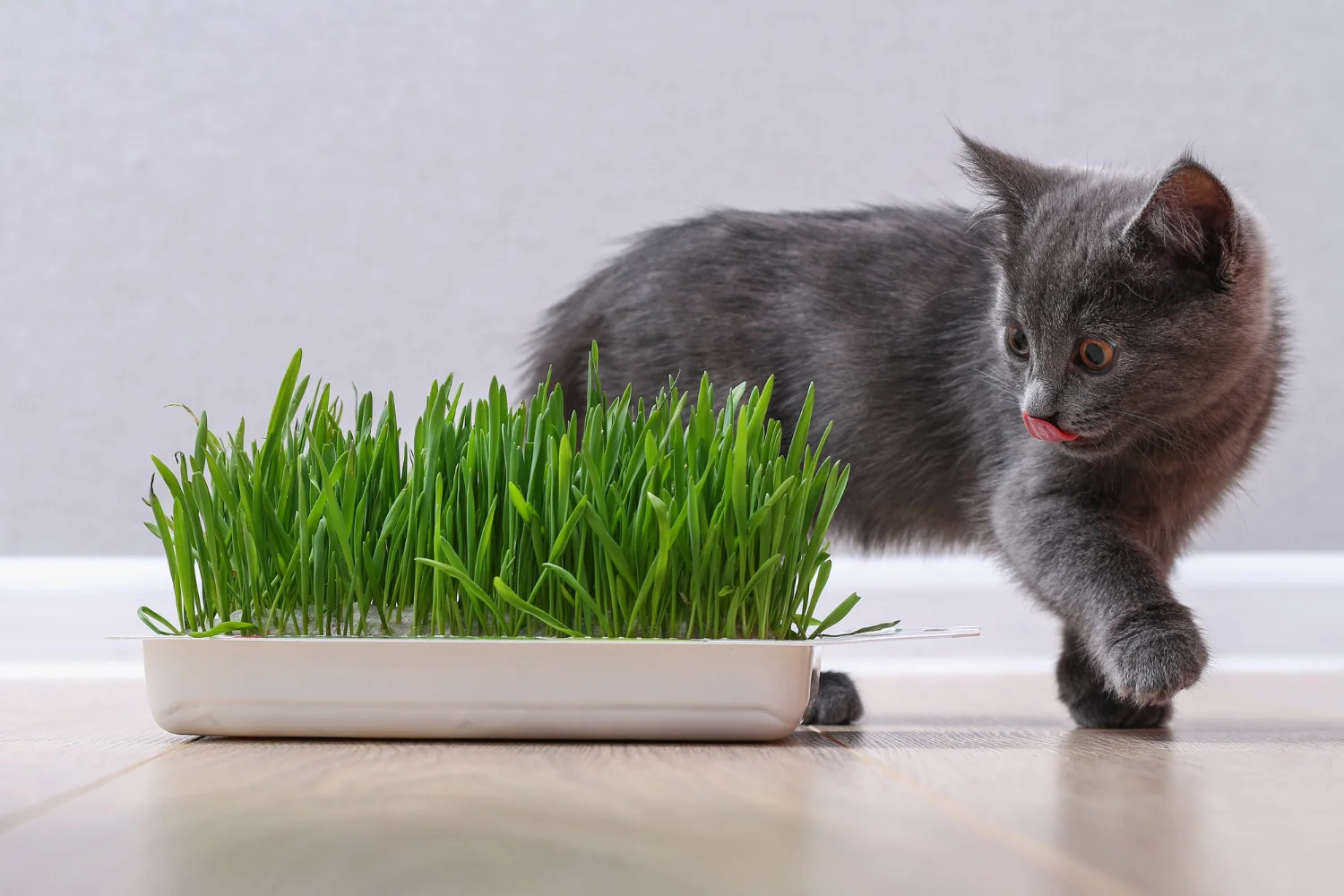
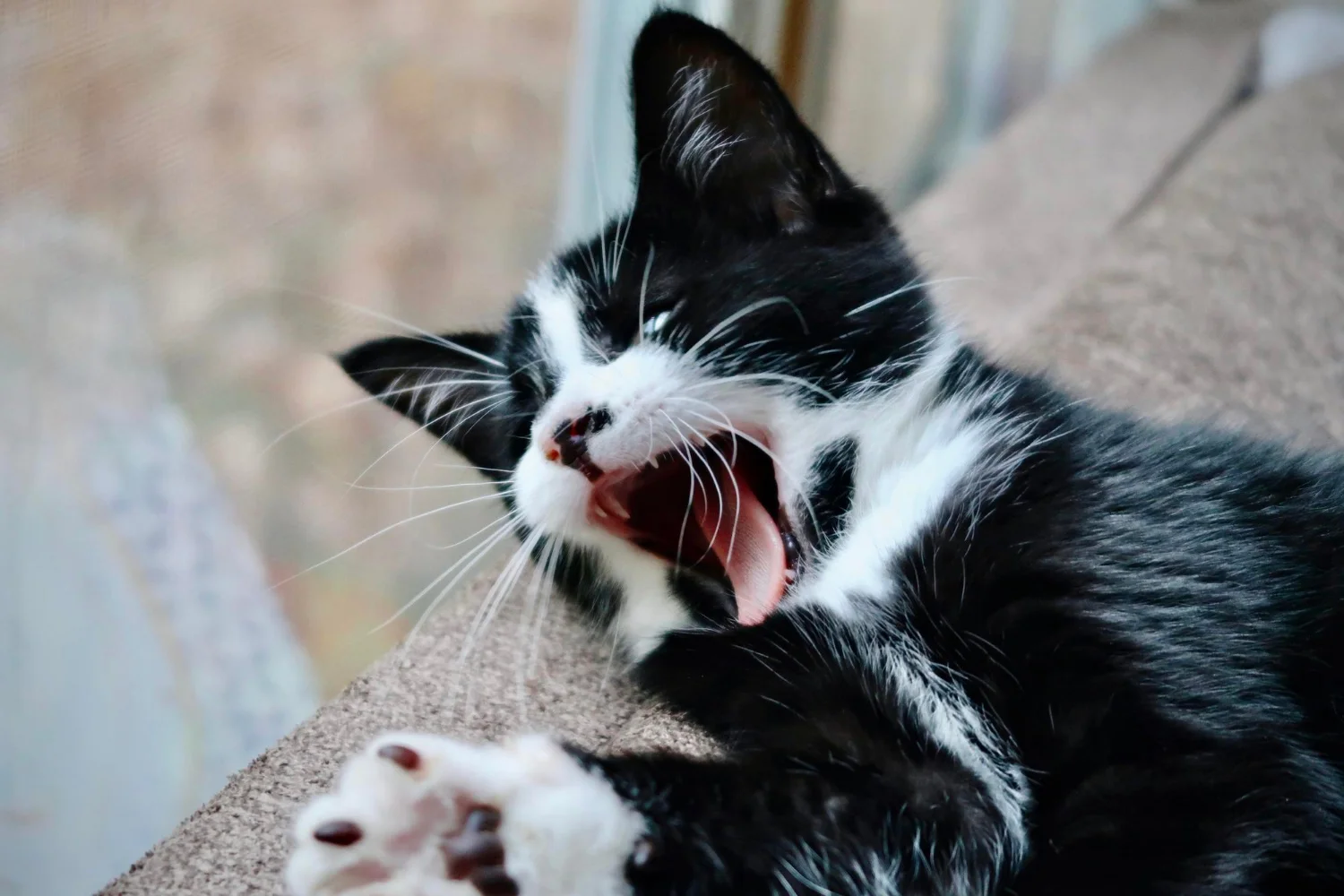
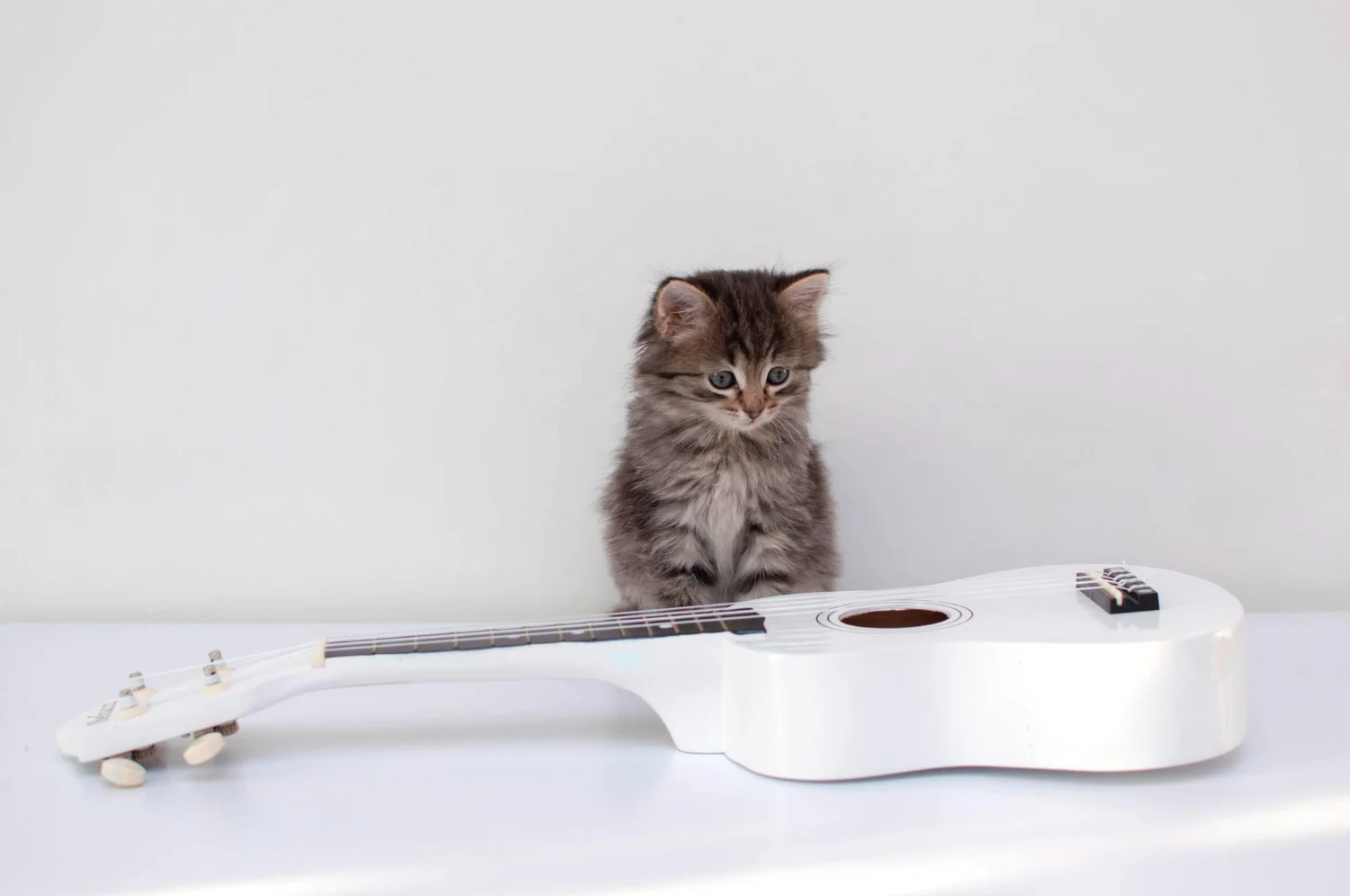
Cats are particular about sounds. We all know their tiny ears can pick up the slightest vibrations. Loud or harsh noises send them running and hiding under your bed. However, the ukulele’s soft timbre catches their attention differently, and they actually curl up by your side to listen to the music. Some cats purr along with certain chord progressions. The vibrations and gentle frequencies appeal to their sensitive hearing. You can try playing during your cat’s relaxed evening hours for the best response.
We all know that parrots and cockatiels are natural music lovers. These intelligent birds often bob their heads and dance to ukulele tunes. One cockatiel owner noticed their bird moving rhythmically to every practice session. Your parrot might vocalize along with your playing. Birds in the wild use sounds for communication and bonding. When you play ukulele near your feathered friend, you create a shared musical experience. This strengthens your bond and provides mental stimulation.
Ferrets are curious creatures who love new experiences. The ukulele offers both sound and sight interest. Your ferret might be interested in the instrument and come peek when you’re between songs or settle nearby during longer sessions.
Now that we understand ukulele history, let us apply it to pet care. The instrument’s development focused on creating pleasant and accessible music. This same quality makes it perfect for our pets.
Boredom leads to destructive behaviors in pets. We see chewed furniture, excessive meowing, and feather plucking. Regular ukulele sessions give your pets something positive to focus on. You can start by playing the ukulele or simply put on a YouTube video for 15 to 20 minutes daily. With time, your pets will anticipate these calming moments. The routine helps structure their day and reduces anxiety.
The ukulele’s gentle nature fits perfectly into our homes. Unlike louder instruments, it will not startle your pets. The soft volume creates background ambiance that soothes everyone.
You can combine your practice time with positive reinforcement training. The music can be a reward for your pets for calm behavior during sessions. They will associate the ukulele with good things.
We believe in holistic pet wellness. Music therapy is an underused tool in our pet care arsenal. The ukulele history shows us how simple instruments create profound effects. Start slowly if your pets are not used to music. Play softly at first. Watch how they respond and adjust accordingly. Some pets need time to appreciate the sounds. You can also consider learning simple Hawaiian songs. These traditional melodies align with the ukulele history and create the most soothing atmosphere. Your pets will feel the authentic island calm.
We encourage you to explore music with your pets. The ukulele offers an easy entry point. Its rich history and gentle sound make it ideal for animal companions. The best part is that the ukulele is an easy instrument to learn. Therefore, you get to pick up an instrument and create a stronger bond with your pet. You can also bookmark our blog for training tips, product reviews, and wellness advice. We are here to help you give your pets their best life. Share your musical pet moments with our community. Together, we can discover new ways to enrich our animals’ lives!
FAQs
➥ Can ukulele music really calm anxious dogs?
Yes, the soft tones and gentle frequencies help reduce stress in nervous dogs. Many owners report their anxious pets settling down during practice sessions with visible relaxation.
➥ What type of ukulele music do cats prefer?
Cats respond best to slower, simpler melodies played at moderate volumes. Avoid fast strumming patterns, as these might startle your cat instead of soothing them properly.
➥ Will my parrot learn to dance to ukulele?
Many parrots naturally bob their heads to music, including ukulele. Your bird might develop unique movements or vocalizations when you play regularly for them each day.
➥ How long should I play ukulele for my pets?
Start with short 10-minute sessions and gradually increase to 20 minutes. Watch your pet’s body language to ensure they remain comfortable and engaged throughout the music.
➥ Do ferrets actually enjoy ukulele music?
Ferrets are curious and often settle near interesting sounds. The ukulele provides both auditory stimulation and a novel object for your ferret to investigate during playtime.

Isla Bennett loves Misty, her two-year-old British Shorthair. And she wants to help other pet parents make sustainable choices that are good for their pets and the planet. She writes about easy ways to care for animals using green products. Isla believes that happy pets and a healthy earth go hand in hand. Her goal is to make pet care simple, fun, and eco-friendly. She also gives you insights about different pet Breeds and traits!